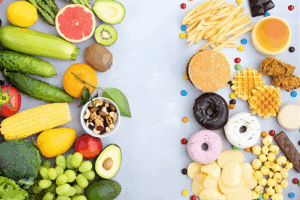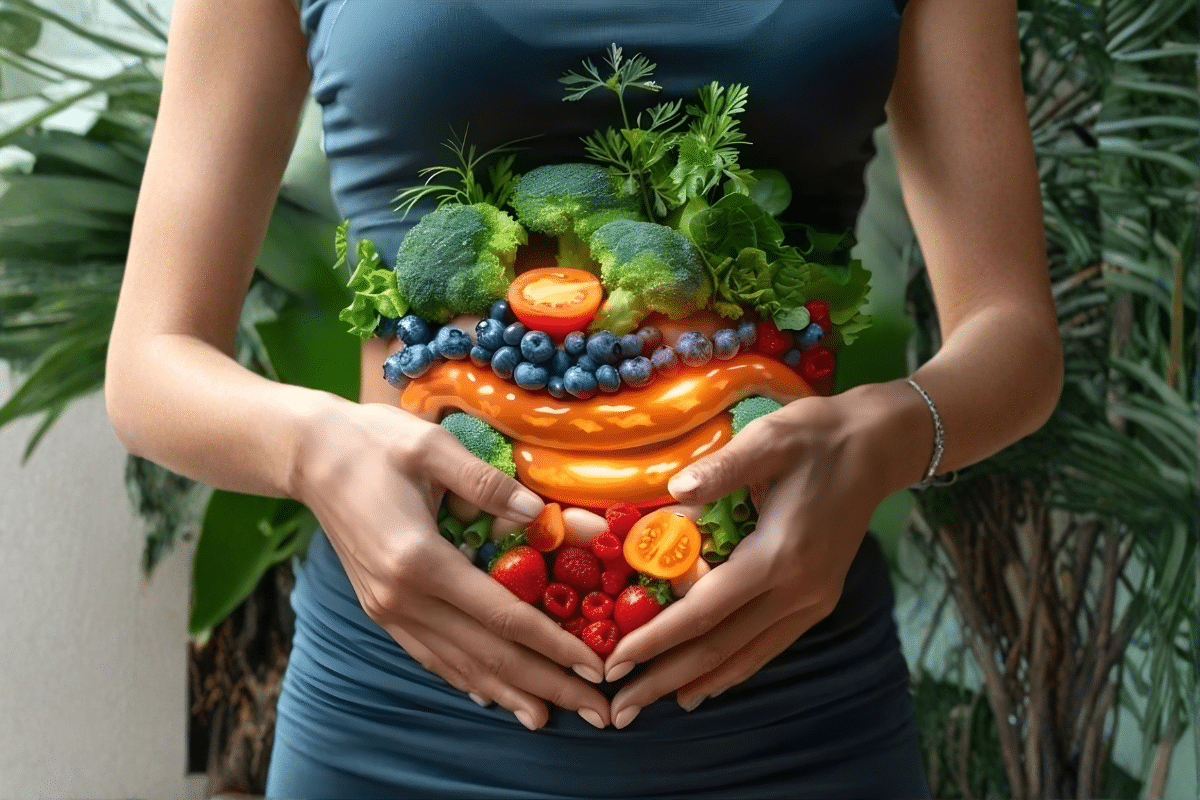
How does eating healthy improve gut health?
What is good gut health and why does eating healthy matter? It seems these days that everyone knows someone with a food intolerance. It begs the question, what’s changed over the years that has contributed to surveys now indicating that up to a quarter of our population believing they suffer from a food intolerance*? Below we discuss what is gut health, how diet, lifestyle and genetics impact the microbiome and why a whole food diet is the first protocol to a flourishing gut and thriving life.
A good gut is laden with bacteria
Before you get all squirmy, let me elaborate. For those who don’t know much about what makes up the gut microbiome, in the simplest terms it is the collection of good bacteria and/or bad bacteria. For a healthy, well-functioning gut that will break down your food properly, aid digestion and keep things regular – the more good bacteria the better. You want diversity, you want abundance, just like a rainforest, with so many different plants all working together, the gut is like our own little ecosystem and with the right bacteria functioning together it will help you digest nutrients and fire off the right neurotransmitters that affect your brain and your mood and your feelings.
Eating healthy, diverse wholefood keeps the good bacteria alive
There’s a reason that fad diets fail in the long run. There’s also a reason why in helping some of my sickest patients recover from autoimmune conditions and chronic illnesses, I’m always wary about going down the path of an elimination diet. In some instances, an elimination diet is helpful and necessary for a calculated period of time, but it should never be a long term goal. Here’s why: eating healthy, diverse wholefood is necessary to keep the right bacteria alive in your gut. A gut overpopulated by one strain, or completely starved of another will cause issues with mood, digestion, weight and more.
A diverse diet of nutrient-rich food is your friend. But to grasp that properly, there needs to be an understanding of prebiotics and probiotics.
Prebiotics and probiotics – what’s the difference and where do I find them?
Yes, the health industry has capitalised on these terms and it’s not surprising if your first initial response to the question is to find them in the vitamin aisle of a health food store.
I like to think of those isles as my pitstop for small top-ups… it’s not my first point of call, but it’s certainly helpful. This is where a whole food diet does the heavy lifting for you. By eating an abundance (and variety) of fresh vegetables, fruits, nuts, legumes and quality meats you can daily boost your intake of both prebiotics and probiotics with no extra effort or cost.
But what’s the difference between prebiotics and probiotics? Most simply, probiotics are the strains of good bacteria that contribute to a strong, well-functioning digestive system. Prebiotics are the plant fibres and sources that probiotics feed on to stay alive and grow within the gut.
Depending on your genes you may need to be more intentional about prebiotics and probiotics.
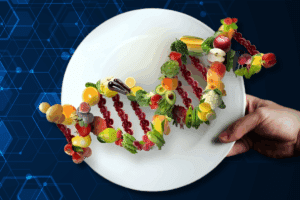
So, here’s the other thing to consider when trying to maintain a healthy gut: whether your genes can have an impact on gut health. As a geneticist, this is the area I love talking about most. With an understanding of our genes, it can help us know what areas of our health we need to vary our approach on in order to work with and not against how our body works.
In regards to gut health, a particular gene that has been identified to impact one’s ability to easily maintain a healthy gut flora is fucosyltransferase-2 (FUT2) and whether you have the variants of that gene that make you a secretor or non-secretor of the ABO antigen – a helpful food source for good bacteria that is distributed around the body through the blood. It comes without surprise then that those who carry the secretor variant of FUT2 will more easily maintain a diverse gut microbiome, as their bodies have greater levels of the ABO antigen working around the clock for them, keeping the good bacteria alive.
For this reason, a whole food diet rich in fibre and both prebiotic and probiotic foods is particularly important for non-secretors to experience a positive change in their gut health. But that’s something we can unpack more in the future together.
Would you like to learn more about how you can improve gut health with a whole food eating approach? Join me in a FREE livenar where I give you a simplified wholefood diet plan. Join the waitlist here.
*source:
https://ndnr.com/gastrointestinal/fut2-secretor-status-effects-on-gut-health